by Team Del Genio
Wednesday, Dec 31, 2025We previously looked into answering the question regarding how important home-field advantage was in the first round of the college football playoffs.
Let’s look at some of those queries and evaluate if the results in the first round of the college football playoffs this year offered any answers to help out with handicapping moving forward.
(1) How much of a factor is same-season revenge?
Last year, Ohio State’s quarterfinal game against Oregon gave them the opportunity to avenge a 32-21 loss against the Ducks in the regular season. The Buckeyes beat them in the playoffs by a 41-21 score.
There were two revenge opportunities in the first round of the playoffs this year, and the results were mixed. After losing to the Sooners, 23-21, in the regular season, the Crimson Tide avenged that defeat with a 34-24 victory to advance to the quarterfinals. Yet the Green Wave were unable to avenge their September loss to Ole Miss in their 41-10 loss in the rematch. The sample size is too small, yet we take note that both Power Four conference teams that had the opportunity to avenge a same-season loss in the two years of the college football playoffs won their rematch game.
(2) Can the Group of Five football teams stay competitive against Power Four conference opponents?
Last year, only a one-loss Boise State team made the playoffs. They played Penn State in the college football quarterfinals and got beaten by a 31-14 score as an 11.5-point underdog. The Nittany Lions had played ten days prior in the first round of the playoffs, knocking off any rust from not playing since the end of the regular season. The Broncos had not played in 25 days since beating UNLV in the Mountain West Conference championship game.
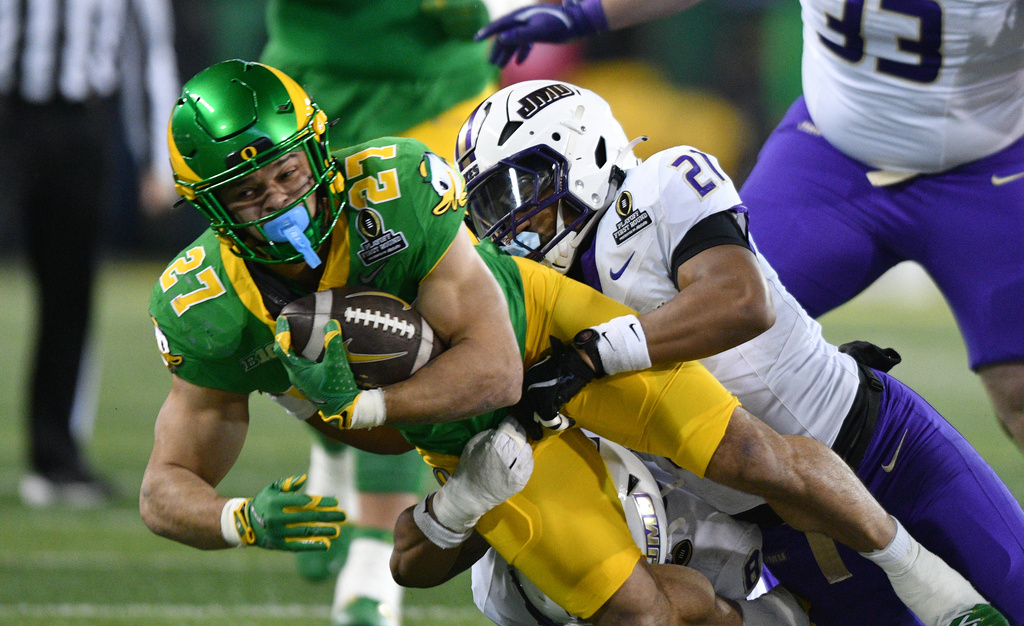
In the first round of the playoffs this year, both Group of Five representatives lost. Tulane got dominated on the road at Ole Miss. James Madison lost at Oregon by 17 points, so they technically covered the point spread, yet they trailed by 35 points before scoring 21 of the final 24 points. So far, there is not much evidence that these Group of Five programs can keep up with the Power Four conference teams that make the playoffs.
(3) Are coaches bound for new jobs negatively impacted by that distraction?
Tulane’s Jon Sumrall and James Madison’s Bob Chesney accepted Power Four conference head coaching jobs after getting their Group of Five teams into the playoffs. As opposed Mississippi who did not want Lane Kiffin distracted with his new and immediate responsibilities in recruiting and retaining the roster at LSU (while using his influence on Ole Miss players), both the Green Wave and the Dukes let their head coaches stay on despite the inevitable double-duty they would have to manage given their new responsibilities that could not wait until the playoffs were over. Both those teams got beaten by 17 and 31 points.
The results for offensive and defensive coordinators were better. For Oregon, both their offensive and defensive coordinators were hired as head coaches, yet stayed on to fulfill their coaching duties with the Ducks. Oregon dominated James Madison but did not cover the point spread, given the Dukes’ back-door cover.
(4) How would teams respond to losing their head coach?
The Mississippi players were left at the proverbial altar by Kiffin when he decided the pastures would be greener at LSU. Defensive coordinator Pete Golding was promoted to be their new permanent head coach. The Rebels could have come out flat from feelings of being rejected by Kiffin. On the other hand, the feeling of being abandoned by Kiffin could be a motivating factor for Ole Miss. In hindsight of their 31-point victory, it was the latter. The question now becomes, will it be sustainable? In 1989, the Michigan basketball team responded to their head coach Bill Frieder leaving the program for Arizona State by winning six straight games and seizing the national championship.
(5) Does extra time off for teams help or hurt them in the playoffs?
Last year, all four first-round playoff games matched teams playing with exactly the same amount of rest.
This year, there were two first-round matchups that involved teams with different rest schedules. Alabama had played in the SEC championship game, so they had one week less of rest in their game against Oklahoma. The Crimson Tide won 34-24. That result supports the idea that concerns about rust may be more significant than the need for additional rest.
James Madison had one less week of rest against Oregon after winning their Sun Belt Conference championship game. The eye test suggests they got blown out. However, their back door cover gave them a positive result from a point spread perspective while indicating they did not run out of gas.
This question will be even more interesting for the quarterfinals this year. All four games involve teams playing with 11-12 days of rest against opponents who have not played their conference championship games on December 6th. Will those extra two weeks of rest only add rust?
Last year, all four teams playing with the additional two weeks of rest lost their games. Do those results expose the negative impact of rust, or did the flawed seeding system play a role in those results? More questions that we may get answers to as the expanded college football playoffs continue in their second year.
Good luck - TDG.
Let’s look at some of those queries and evaluate if the results in the first round of the college football playoffs this year offered any answers to help out with handicapping moving forward.
(1) How much of a factor is same-season revenge?
Last year, Ohio State’s quarterfinal game against Oregon gave them the opportunity to avenge a 32-21 loss against the Ducks in the regular season. The Buckeyes beat them in the playoffs by a 41-21 score.
There were two revenge opportunities in the first round of the playoffs this year, and the results were mixed. After losing to the Sooners, 23-21, in the regular season, the Crimson Tide avenged that defeat with a 34-24 victory to advance to the quarterfinals. Yet the Green Wave were unable to avenge their September loss to Ole Miss in their 41-10 loss in the rematch. The sample size is too small, yet we take note that both Power Four conference teams that had the opportunity to avenge a same-season loss in the two years of the college football playoffs won their rematch game.
(2) Can the Group of Five football teams stay competitive against Power Four conference opponents?
Last year, only a one-loss Boise State team made the playoffs. They played Penn State in the college football quarterfinals and got beaten by a 31-14 score as an 11.5-point underdog. The Nittany Lions had played ten days prior in the first round of the playoffs, knocking off any rust from not playing since the end of the regular season. The Broncos had not played in 25 days since beating UNLV in the Mountain West Conference championship game.
In the first round of the playoffs this year, both Group of Five representatives lost. Tulane got dominated on the road at Ole Miss. James Madison lost at Oregon by 17 points, so they technically covered the point spread, yet they trailed by 35 points before scoring 21 of the final 24 points. So far, there is not much evidence that these Group of Five programs can keep up with the Power Four conference teams that make the playoffs.
(3) Are coaches bound for new jobs negatively impacted by that distraction?
Tulane’s Jon Sumrall and James Madison’s Bob Chesney accepted Power Four conference head coaching jobs after getting their Group of Five teams into the playoffs. As opposed Mississippi who did not want Lane Kiffin distracted with his new and immediate responsibilities in recruiting and retaining the roster at LSU (while using his influence on Ole Miss players), both the Green Wave and the Dukes let their head coaches stay on despite the inevitable double-duty they would have to manage given their new responsibilities that could not wait until the playoffs were over. Both those teams got beaten by 17 and 31 points.
The results for offensive and defensive coordinators were better. For Oregon, both their offensive and defensive coordinators were hired as head coaches, yet stayed on to fulfill their coaching duties with the Ducks. Oregon dominated James Madison but did not cover the point spread, given the Dukes’ back-door cover.
(4) How would teams respond to losing their head coach?
The Mississippi players were left at the proverbial altar by Kiffin when he decided the pastures would be greener at LSU. Defensive coordinator Pete Golding was promoted to be their new permanent head coach. The Rebels could have come out flat from feelings of being rejected by Kiffin. On the other hand, the feeling of being abandoned by Kiffin could be a motivating factor for Ole Miss. In hindsight of their 31-point victory, it was the latter. The question now becomes, will it be sustainable? In 1989, the Michigan basketball team responded to their head coach Bill Frieder leaving the program for Arizona State by winning six straight games and seizing the national championship.
(5) Does extra time off for teams help or hurt them in the playoffs?
Last year, all four first-round playoff games matched teams playing with exactly the same amount of rest.
This year, there were two first-round matchups that involved teams with different rest schedules. Alabama had played in the SEC championship game, so they had one week less of rest in their game against Oklahoma. The Crimson Tide won 34-24. That result supports the idea that concerns about rust may be more significant than the need for additional rest.
James Madison had one less week of rest against Oregon after winning their Sun Belt Conference championship game. The eye test suggests they got blown out. However, their back door cover gave them a positive result from a point spread perspective while indicating they did not run out of gas.
This question will be even more interesting for the quarterfinals this year. All four games involve teams playing with 11-12 days of rest against opponents who have not played their conference championship games on December 6th. Will those extra two weeks of rest only add rust?
Last year, all four teams playing with the additional two weeks of rest lost their games. Do those results expose the negative impact of rust, or did the flawed seeding system play a role in those results? More questions that we may get answers to as the expanded college football playoffs continue in their second year.
Good luck - TDG.
