by Team Del Genio
Wednesday, Dec 31, 2025The inaugural 12-team college football playoff system last year resulted in some questions given its unique circumstances. Perhaps the biggest is this: Is home-field advantage a significant advantage in the first round?
With the results of eight games in the first round of the playoffs, we can begin to come up with some answers.
Last year, all four teams playing on their home campus in the first round of the playoffs won their games by ten or more points. The average score in those games was 36-17. Two of the games were blowouts by 25 and 28 points. Were these one-sided games a result of the edge of playing in their own stadium in front of their home fans? Or were these blowouts a product of a flawed seeding system that rewarded the top four seeds to conference championship game winners rather than a pure ranking system?
Those top four seed requirements meant that Notre Dame was ineligible to get a bye into the quarterfinals, despite their 11-1 record. It also meant that conference championship game winners Boise State and Arizona State got byes in the quarterfinals, yet would be double-digit underdogs on a neutral field in the quarterfinals against Penn State and Texas. An undefeated Oregon team would have been the number one seed in any ranking system, yet they were done no favors with Ohio State inserted as an eight seed. The oddsmakers installed the two-loss Buckeyes’ team as a small favorite. So the first-round blowouts last year may have been because the better teams in the playoffs were relegated to playing in the opening round because of a flawed seeding system.
That problem was addressed in the offseason. The top-four ranked teams now got the byes into the quarterfinals, with Notre Dame being eligible. Conference championships were not an official requirement.
The initial results from earlier this month suggest home field was less important than the flawed seeding system that placed the better teams in those first-round games. Only two home teams won their game to advance to the quarterfinals. Mississippi got to play one of the Group of Five entries, Tulane, as a favorite of around 17 points. They won by a 41-10 score. Oregon also beat its Group of Five opponent, James Madison, yet did not cover the three-touchdown point spread that the oddsmakers installed them as a favorite. The Ducks were up 48-13 in that game before the Dukes scored 21 of the final 24 points for that back-door cover.
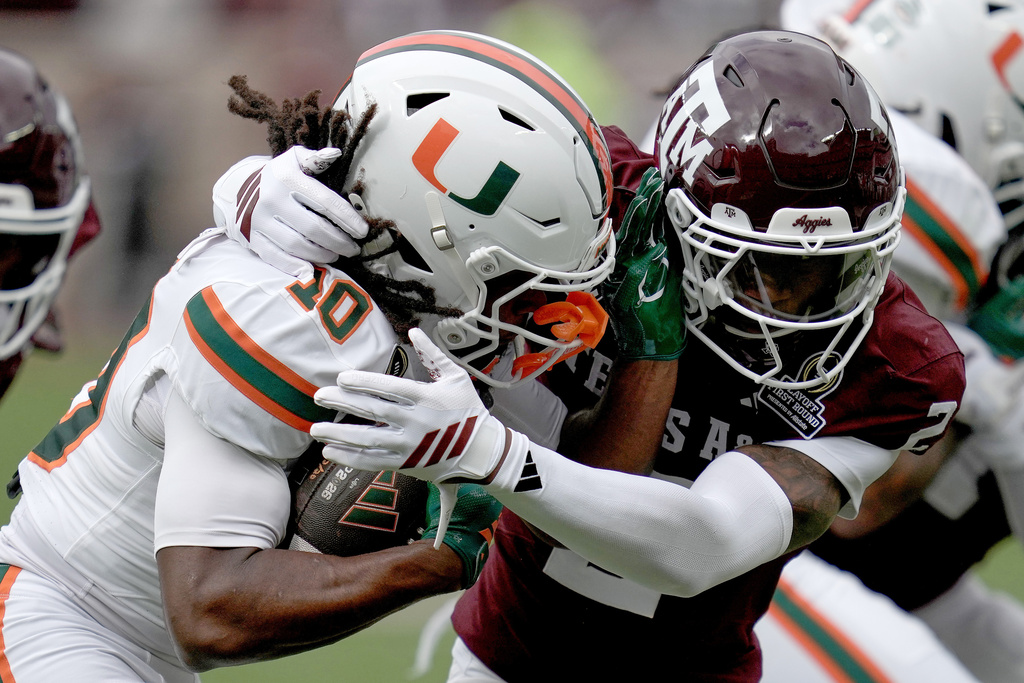
Both Power Four conference teams that played at home against another Power Four conference team lost their games. Alabama upset Oklahoma by a 34-24 score as a 1.5-point favorite despite that game being played in Stillwater. Miami (FL) upset Texas A&M by a 10-3 score as a three-point underdog despite that game being played in College Station. In all, two of the home teams won, and only one of them covered the point spread.
The sample size is small, yet the initial results suggest last year's first-round blowouts may have had more to do with the flawed seeding system than with an overwhelming home-field edge.
Good luck - TDG.
With the results of eight games in the first round of the playoffs, we can begin to come up with some answers.
Last year, all four teams playing on their home campus in the first round of the playoffs won their games by ten or more points. The average score in those games was 36-17. Two of the games were blowouts by 25 and 28 points. Were these one-sided games a result of the edge of playing in their own stadium in front of their home fans? Or were these blowouts a product of a flawed seeding system that rewarded the top four seeds to conference championship game winners rather than a pure ranking system?
Those top four seed requirements meant that Notre Dame was ineligible to get a bye into the quarterfinals, despite their 11-1 record. It also meant that conference championship game winners Boise State and Arizona State got byes in the quarterfinals, yet would be double-digit underdogs on a neutral field in the quarterfinals against Penn State and Texas. An undefeated Oregon team would have been the number one seed in any ranking system, yet they were done no favors with Ohio State inserted as an eight seed. The oddsmakers installed the two-loss Buckeyes’ team as a small favorite. So the first-round blowouts last year may have been because the better teams in the playoffs were relegated to playing in the opening round because of a flawed seeding system.
That problem was addressed in the offseason. The top-four ranked teams now got the byes into the quarterfinals, with Notre Dame being eligible. Conference championships were not an official requirement.
The initial results from earlier this month suggest home field was less important than the flawed seeding system that placed the better teams in those first-round games. Only two home teams won their game to advance to the quarterfinals. Mississippi got to play one of the Group of Five entries, Tulane, as a favorite of around 17 points. They won by a 41-10 score. Oregon also beat its Group of Five opponent, James Madison, yet did not cover the three-touchdown point spread that the oddsmakers installed them as a favorite. The Ducks were up 48-13 in that game before the Dukes scored 21 of the final 24 points for that back-door cover.
Both Power Four conference teams that played at home against another Power Four conference team lost their games. Alabama upset Oklahoma by a 34-24 score as a 1.5-point favorite despite that game being played in Stillwater. Miami (FL) upset Texas A&M by a 10-3 score as a three-point underdog despite that game being played in College Station. In all, two of the home teams won, and only one of them covered the point spread.
The sample size is small, yet the initial results suggest last year's first-round blowouts may have had more to do with the flawed seeding system than with an overwhelming home-field edge.
Good luck - TDG.
