by Vegas Writer
Tuesday, Oct 13, 2026Five weeks cannot settle an NFL season, but they can expose the difference between a promising start and a sustainable identity.
Minnesota and San Francisco reached 5-0 through different formulas. Jacksonville continued taking away opponents’ running games. New England reminded us that September struggles need not become October limitations.
The primetime games reinforced a familiar lesson: winning takes more than a quarterback who can produce highlights. Baltimore survived without Lamar Jackson, while Buffalo needed a decisive special teams play to finish Monday night.
Here are five observations supported by the performances and patterns emerging through Week 5.
1. Minnesota’s defense gives its offense room to grow
The Vikings’ unbeaten start becomes more convincing as their offense begins to complement the defense.
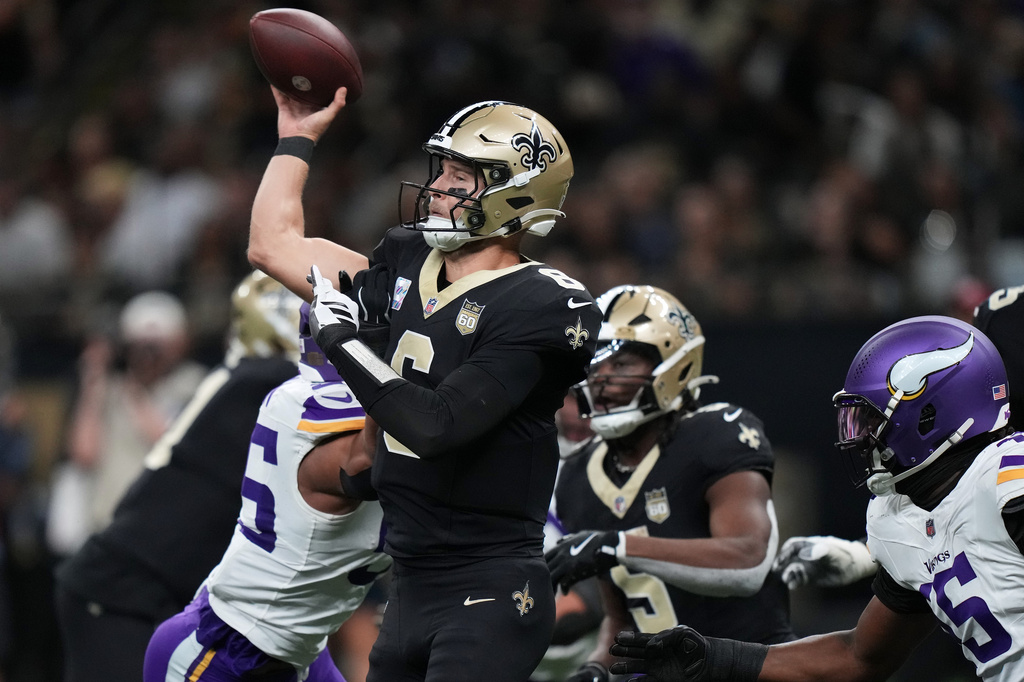
Minnesota beat New Orleans 23-13 while holding the Saints to 142 total yards. Tyler Shough completed 16 of 25 passes for just 96 yards and threw two interceptions. Brian Flores’ defense consistently denied New Orleans the production needed to sustain an offense.
The pressure explains much of that frustration. Minnesota blitzed on 61.5% of Shough’s dropbacks and generated pressure on 50% of plays. A defense does not need a large sack total to control a game when it keeps forcing hurried decisions and short completions.
Meanwhile, Kyler Murray completed 24 of 30 passes for 229 yards and a touchdown. Minnesota finally has an offensive performance to build upon alongside its defensive consistency.
That combination matters. The Vikings have already demonstrated they can win while their offense develops. If Murray gets more comfortable, Minnesota can ask less of its defense without losing the strength that gave it an early advantage.
2. San Francisco can win when the game stops following its script
The 49ers’ 32-29 victory at Seattle offered a useful test of their unbeaten record: could they finish a divisional road game after surrendering control?
San Francisco produced four takeaways and five sacks, yet still entered the fourth quarter trailing 26-21. Creating opportunities was only half the job. The offense needed to respond when the Seahawks had put themselves in position to win.
Brock Purdy answered with a 12-play, 74-yard touchdown drive, finding Brandin Cooks before completing the two-point conversion to Mike Evans. After Seattle tied the game, another sustained possession produced Eddy Piñeiro’s winning 44-yard field goal. Malik Mustapha then stopped Cooper Kupp short of the marker on Seattle’s final fourth-down attempt.
My takeaway is that San Francisco’s strongest quality is its range of answers. The defense created chances, the offense handled late possessions, and the final stop protected the result.
Close victories still reveal weaknesses worth correcting. But winning through several different contributors gives the 49ers a more credible foundation than a record built entirely on one dominant unit.
3. Jacksonville’s run defense deserves as much attention as its dramatic finish
Cam Little’s winning kick will remain the defining image of Jacksonville’s 19-17 victory over Philadelphia. The Jaguars’ defensive pattern may tell us more about their season.
Through five games, Jacksonville has not allowed an opposing player to rush for 40 yards. The only other team in the Super Bowl era to accomplish that was the 1969 Dallas Cowboys. The Jaguars also allowed just 23 team rushing yards in Week 4 and 22 in Week 5.
Taking away the run changes an opponent’s choices. It makes manageable second downs harder to find and increases the burden on pass protection and quarterback execution.
Jacksonville still has substantial cleanup work. Against Philadelphia, the Jaguars committed 13 penalties for 100 yards and twice reached the Eagles’ 1-yard line without scoring. Those failures nearly wasted the defensive effort.
The observation is encouraging but measured: Jacksonville has a repeatable defensive strength supporting its 4-1 record. Better discipline and short-yardage execution would give the Jaguars a better chance to turn that strength into wins that require fewer last-second escapes.
4. New England’s turnaround exposes the danger of freezing an early opinion
The Patriots’ 45-17 victory over Las Vegas demands a reassessment of both teams.
Drake Maye completed 26 of 34 passes for 374 yards and four touchdowns, posted a 150.9 passer rating and added a rushing score. It followed another game with at least three touchdown passes, giving New England its first consecutive performances of that kind since Tom Brady in 2018.
For the Raiders, the concern extends beyond encountering a hot quarterback. Las Vegas allowed 536 yards, committed eight penalties for 101 yards and received just 27 rushing yards from Ashton Jeanty. Problems appeared across the roster rather than in one isolated matchup.
My assessment is that New England has earned a fresh evaluation, while Las Vegas must demonstrate that its early success can survive without favorable turnover swings.
Neither team should be defined entirely by Sunday. But the Patriots’ improving quarterback play and the Raiders’ persistent rushing problems are meaningful evidence. Those developments deserve more weight than reputations established during the first three weeks.
5. Primetime rewarded teams that could find one more answer
Baltimore and Buffalo won overtime games through very different quarterback circumstances, but both victories demonstrated the value of contributions beyond the passing game.
Without Lamar Jackson, the Ravens beat Atlanta 30-23 behind Tyler Huntley and a running game that produced 208 yards. Huntley delivered a late touchdown pass, Derrick Henry supplied the tying two-point conversion, and Kyle Hamilton’s interception ended Atlanta’s overtime response.
Buffalo’s 37-34 win at Los Angeles required similar help around its star. Josh Allen threw for 210 yards and ran for 121, but James Cook’s overtime fumble gave the Rams a chance to win. Greg Rousseau blocked their field-goal attempt, and Tyler Bass eventually converted from 45 yards.
The lesson is about how teams survive imperfect nights. Baltimore retained enough offensive structure to win with its backup. Buffalo had a special teams answer after a potentially decisive turnover.
Quarterback play remains central to contention. Week 5 showed why the teams around those quarterbacks must also be able to rescue a game.
Minnesota and San Francisco reached 5-0 through different formulas. Jacksonville continued taking away opponents’ running games. New England reminded us that September struggles need not become October limitations.
The primetime games reinforced a familiar lesson: winning takes more than a quarterback who can produce highlights. Baltimore survived without Lamar Jackson, while Buffalo needed a decisive special teams play to finish Monday night.
Here are five observations supported by the performances and patterns emerging through Week 5.
1. Minnesota’s defense gives its offense room to grow
The Vikings’ unbeaten start becomes more convincing as their offense begins to complement the defense.
Minnesota beat New Orleans 23-13 while holding the Saints to 142 total yards. Tyler Shough completed 16 of 25 passes for just 96 yards and threw two interceptions. Brian Flores’ defense consistently denied New Orleans the production needed to sustain an offense.
The pressure explains much of that frustration. Minnesota blitzed on 61.5% of Shough’s dropbacks and generated pressure on 50% of plays. A defense does not need a large sack total to control a game when it keeps forcing hurried decisions and short completions.
Meanwhile, Kyler Murray completed 24 of 30 passes for 229 yards and a touchdown. Minnesota finally has an offensive performance to build upon alongside its defensive consistency.
That combination matters. The Vikings have already demonstrated they can win while their offense develops. If Murray gets more comfortable, Minnesota can ask less of its defense without losing the strength that gave it an early advantage.
2. San Francisco can win when the game stops following its script
The 49ers’ 32-29 victory at Seattle offered a useful test of their unbeaten record: could they finish a divisional road game after surrendering control?
San Francisco produced four takeaways and five sacks, yet still entered the fourth quarter trailing 26-21. Creating opportunities was only half the job. The offense needed to respond when the Seahawks had put themselves in position to win.
Brock Purdy answered with a 12-play, 74-yard touchdown drive, finding Brandin Cooks before completing the two-point conversion to Mike Evans. After Seattle tied the game, another sustained possession produced Eddy Piñeiro’s winning 44-yard field goal. Malik Mustapha then stopped Cooper Kupp short of the marker on Seattle’s final fourth-down attempt.
My takeaway is that San Francisco’s strongest quality is its range of answers. The defense created chances, the offense handled late possessions, and the final stop protected the result.
Close victories still reveal weaknesses worth correcting. But winning through several different contributors gives the 49ers a more credible foundation than a record built entirely on one dominant unit.
3. Jacksonville’s run defense deserves as much attention as its dramatic finish
Cam Little’s winning kick will remain the defining image of Jacksonville’s 19-17 victory over Philadelphia. The Jaguars’ defensive pattern may tell us more about their season.
Through five games, Jacksonville has not allowed an opposing player to rush for 40 yards. The only other team in the Super Bowl era to accomplish that was the 1969 Dallas Cowboys. The Jaguars also allowed just 23 team rushing yards in Week 4 and 22 in Week 5.
Taking away the run changes an opponent’s choices. It makes manageable second downs harder to find and increases the burden on pass protection and quarterback execution.
Jacksonville still has substantial cleanup work. Against Philadelphia, the Jaguars committed 13 penalties for 100 yards and twice reached the Eagles’ 1-yard line without scoring. Those failures nearly wasted the defensive effort.
The observation is encouraging but measured: Jacksonville has a repeatable defensive strength supporting its 4-1 record. Better discipline and short-yardage execution would give the Jaguars a better chance to turn that strength into wins that require fewer last-second escapes.
4. New England’s turnaround exposes the danger of freezing an early opinion
The Patriots’ 45-17 victory over Las Vegas demands a reassessment of both teams.
Drake Maye completed 26 of 34 passes for 374 yards and four touchdowns, posted a 150.9 passer rating and added a rushing score. It followed another game with at least three touchdown passes, giving New England its first consecutive performances of that kind since Tom Brady in 2018.
For the Raiders, the concern extends beyond encountering a hot quarterback. Las Vegas allowed 536 yards, committed eight penalties for 101 yards and received just 27 rushing yards from Ashton Jeanty. Problems appeared across the roster rather than in one isolated matchup.
My assessment is that New England has earned a fresh evaluation, while Las Vegas must demonstrate that its early success can survive without favorable turnover swings.
Neither team should be defined entirely by Sunday. But the Patriots’ improving quarterback play and the Raiders’ persistent rushing problems are meaningful evidence. Those developments deserve more weight than reputations established during the first three weeks.
5. Primetime rewarded teams that could find one more answer
Baltimore and Buffalo won overtime games through very different quarterback circumstances, but both victories demonstrated the value of contributions beyond the passing game.
Without Lamar Jackson, the Ravens beat Atlanta 30-23 behind Tyler Huntley and a running game that produced 208 yards. Huntley delivered a late touchdown pass, Derrick Henry supplied the tying two-point conversion, and Kyle Hamilton’s interception ended Atlanta’s overtime response.
Buffalo’s 37-34 win at Los Angeles required similar help around its star. Josh Allen threw for 210 yards and ran for 121, but James Cook’s overtime fumble gave the Rams a chance to win. Greg Rousseau blocked their field-goal attempt, and Tyler Bass eventually converted from 45 yards.
The lesson is about how teams survive imperfect nights. Baltimore retained enough offensive structure to win with its backup. Buffalo had a special teams answer after a potentially decisive turnover.
Quarterback play remains central to contention. Week 5 showed why the teams around those quarterbacks must also be able to rescue a game.
