by Vegas Writer
Tuesday, Oct 06, 2026Four weeks have begun to separate the NFL’s early promise from its recurring problems. Kansas City, Minnesota and San Francisco remain unbeaten, while Buffalo and Las Vegas absorbed their first losses Sunday.
The more revealing developments came beneath those records.
Kansas City won with an explosive running game despite an uneven afternoon from Patrick Mahomes. Minnesota controlled its game without scoring a touchdown. New England rediscovered its offensive confidence in Buffalo, while Carolina demonstrated that its young quarterback and emerging receiver can carry an offense on a national stage.
Atlanta closed the week Monday night with another commanding road performance, completing an offensive turnaround that has changed the early conversation in the NFC South.
Meanwhile, Houston and the Chargers offered different examples of how competitive teams become winless.
These are five observations drawn from the performances, personnel and situational patterns emerging through Week 4 of the 2026 season:
1. Kansas City’s running game is making the Chiefs harder to contain
Kansas City’s 30-27 victory over Las Vegas demonstrated the value of an offense that can survive without its quarterback controlling the afternoon.
Patrick Mahomes completed only 15 of 30 passes for 225 yards, yet the Chiefs generated enough explosive offense to remain unbeaten. Kenneth Walker III supplied 177 rushing yards and two touchdowns on 22 carries, averaging slightly more than eight yards per attempt.
Walker now has 537 rushing yards on 87 attempts through four games, averaging 6.17 yards per carry. He has exceeded 100 rushing yards three times, including performances of 173 yards against Denver and 177 against the Raiders. Those numbers make the running game central to Kansas City’s identity.
The Raiders experienced the consequences. Walker’s 76-yard run helped set up Kansas City’s first lead, and his two fourth-quarter touchdown runs punished Las Vegas when the game’s opportunities shifted. The Chiefs scored 20 points in the final quarter despite possessing the ball for only 24:18 overall.
For opponents, the strategic problem is substantial. Committing extra defenders to the run creates opportunities for Mahomes; prioritizing coverage gives Walker room to create explosive gains.
Las Vegas finished with more yards and substantially more possession time. Kansas City demonstrated why those advantages can disappear against an offense capable of changing a game in one snap.
2. Minnesota’s unbeaten start is built on control, but its scoring efficiency still needs work
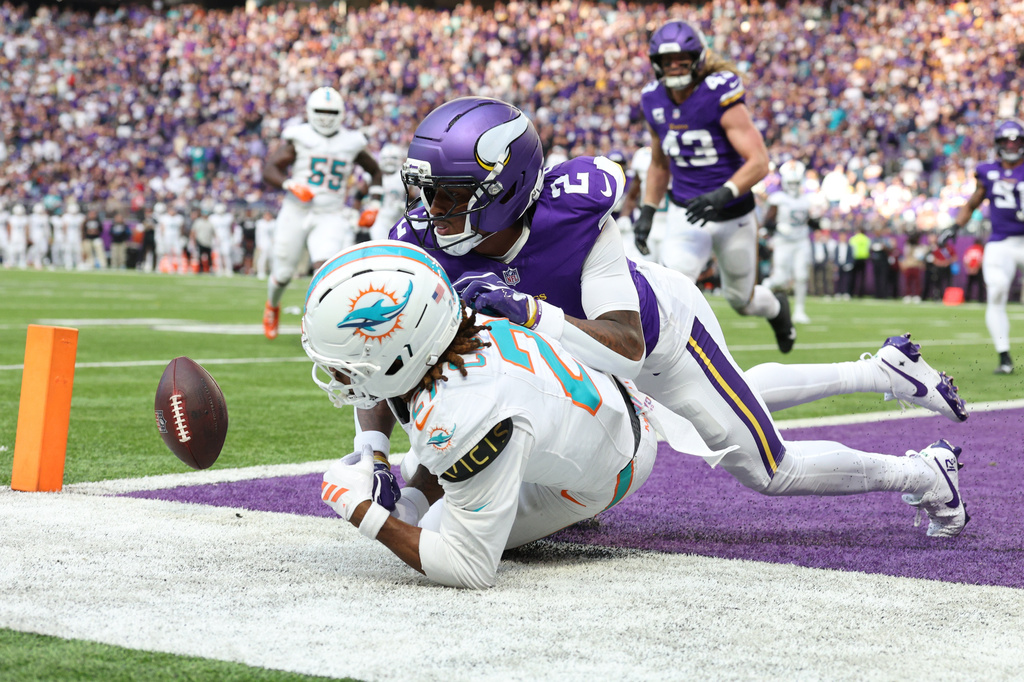
Minnesota’s 15-10 victory over Miami offered a useful distinction between moving the football and finishing possessions.
Will Reichard supplied all 15 points with five field goals, extending his streak to 31 consecutive successful attempts. The Vikings won without Justin Jefferson, leaning on T.J. Hockenson’s 13 catches for 119 yards and Kyler Murray’s 247 passing yards.
The offense nevertheless exerted considerable control. Minnesota ran 72 plays to Miami’s 37, possessed the ball for 39:11 and held it for approximately 14 minutes of the fourth quarter. Aaron Jones contributed 94 rushing yards on 20 carries, while Murray completed 12 of 13 fourth-quarter attempts.
That is a meaningful foundation. Sustained possessions reduce an opponent's opportunities and allow a strong defense to recover between series. Minnesota also protected the football, avoiding giveaways that could have handed Miami an inexpensive scoring opportunity.
Hockenson’s final reception illustrated the team’s situational awareness. He slid at the Miami 2-yard line near the two-minute warning, preserving possession and allowing the Vikings to finish in victory formation with the Dolphins out of timeouts.
The concern is how that formula holds up against more productive offenses. Five successful field goals can win a defensive contest, but repeated possessions ending short of the end zone leave valuable points unclaimed.
Minnesota has shown it can manage games. Improving touchdown production would give that control a larger margin for error.
3. Young quarterbacks benefit when their supporting casts turn opportunities into touchdowns
Drake Maye and Bryce Young supplied two of the weekend’s most encouraging quarterback performances, with each benefiting from receivers who rewarded their decisions.
Maye threw for 269 yards and three touchdowns in New England’s 29-26 victory over Buffalo. His decisive throw became Efton Chism III’s one-handed, 23-yard touchdown reception with 1:50 remaining, followed by a successful two-point pass to Rhamondre Stevenson.
The broader improvement mattered just as much. New England scored four offensive touchdowns Sunday after producing only two across its first three games. Romeo Doubs caught six passes for 58 yards and two touchdowns, giving Maye a productive connection as the Patriots returned to 2-2.
Carolina found similar encouragement in its 32-26 victory over Detroit. Young threw for 329 yards and two touchdowns, while Tetairoa McMillan caught 14 passes for 192 yards and both scores. McMillan nearly matched his first three games’ combined receiving yardage in one evening.
Chuba Hubbard added 122 rushing yards and two touchdowns on 20 carries, giving Carolina the balance that makes a quarterback’s assignment more manageable.
Neither performance settles the long-term evaluation of either quarterback. Both demonstrate why that evaluation must account for the offense around him.
When receivers finish difficult catches and the running game commands attention, young quarterbacks can operate with greater confidence. New England and Carolina showed how quickly improved execution across an offense can change the perception of its most scrutinized player.
4. Atlanta’s offensive turnaround has reopened the NFC South race
Atlanta’s first two games produced 16 combined points. Its next two produced 80.
That reversal became impossible to overlook Monday night, when the Falcons defeated New Orleans 45-24 after winning 35-14 at Green Bay in their previous appearance. Atlanta has moved from 0-2 to 2-2 with consecutive road victories.
Bijan Robinson remains the most compelling explanation. He rushed for 145 yards and two touchdowns against the Saints, opening the scoring with a 59-yard run on Atlanta’s third offensive play. Brian Robinson Jr. added 62 rushing yards and three touchdowns, giving the two backs five rushing scores.
The production is becoming a pattern. Bijan Robinson followed his 194-yard rushing performance at Green Bay with another dominant evening, while Drake London followed 194 receiving yards against the Packers with 96 against New Orleans.
Their combined threat gives Michael Penix Jr. a more favorable operating environment. Defenses must account for an explosive runner and a receiver capable of winning substantial yardage, creating opportunities elsewhere in the formation.
The most revealing sequence came after New Orleans opened the second half with a field goal. Atlanta answered with a nine-play, 74-yard touchdown drive, extending its lead to 31-10.
That response showed an offense sustaining control after its opponent adjusted. Atlanta still must prove this improvement can last, but its recovery has already moved it into a first-place tie with Carolina in the division.
5. Houston and the Chargers are winless for different reasons, requiring different repairs
An 0-4 record describes the urgency facing Houston and the Chargers. Their latest losses reveal different problems.
Houston received a strong performance from C.J. Stroud against Dallas: 347 passing yards, two touchdowns, no interceptions and a 126.7 passer rating. He averaged 11.2 yards per attempt, giving the Texans explosive production without sacrificing ball security.
The Texans nevertheless lost 34-30 after allowing Dallas to overturn a 16-6 halftime deficit. CeeDee Lamb caught 17 passes for 189 yards, including the winning touchdown with 40 seconds remaining. Houston’s offense gave it a chance; its defense could not finish the assignment.
The Chargers’ 30-23 loss at Seattle began unraveling much earlier. Justin Herbert completed five of 15 first-half passes for 36 yards and threw two interceptions. A muffed punt gave Seattle a short touchdown drive, and another scoring possession covered only 20 yards following Herbert’s second interception.
Los Angeles recovered enough to threaten late, but Herbert’s strip-sack ended its final opportunity. The comeback effort could not erase the earlier possessions surrendered.
Houston needs to convert productive quarterback play into complete performances, particularly when protecting a lead. The Chargers need cleaner starts and fewer mistakes that force their offense into recovery mode.
Both teams face dwindling room for further losses. Their paths forward depend on identifying the specific breakdowns behind those records and correcting them before competitive afternoons become another month of missed opportunities.
The more revealing developments came beneath those records.
Kansas City won with an explosive running game despite an uneven afternoon from Patrick Mahomes. Minnesota controlled its game without scoring a touchdown. New England rediscovered its offensive confidence in Buffalo, while Carolina demonstrated that its young quarterback and emerging receiver can carry an offense on a national stage.
Atlanta closed the week Monday night with another commanding road performance, completing an offensive turnaround that has changed the early conversation in the NFC South.
Meanwhile, Houston and the Chargers offered different examples of how competitive teams become winless.
These are five observations drawn from the performances, personnel and situational patterns emerging through Week 4 of the 2026 season:
1. Kansas City’s running game is making the Chiefs harder to contain
Kansas City’s 30-27 victory over Las Vegas demonstrated the value of an offense that can survive without its quarterback controlling the afternoon.
Patrick Mahomes completed only 15 of 30 passes for 225 yards, yet the Chiefs generated enough explosive offense to remain unbeaten. Kenneth Walker III supplied 177 rushing yards and two touchdowns on 22 carries, averaging slightly more than eight yards per attempt.
Walker now has 537 rushing yards on 87 attempts through four games, averaging 6.17 yards per carry. He has exceeded 100 rushing yards three times, including performances of 173 yards against Denver and 177 against the Raiders. Those numbers make the running game central to Kansas City’s identity.
The Raiders experienced the consequences. Walker’s 76-yard run helped set up Kansas City’s first lead, and his two fourth-quarter touchdown runs punished Las Vegas when the game’s opportunities shifted. The Chiefs scored 20 points in the final quarter despite possessing the ball for only 24:18 overall.
For opponents, the strategic problem is substantial. Committing extra defenders to the run creates opportunities for Mahomes; prioritizing coverage gives Walker room to create explosive gains.
Las Vegas finished with more yards and substantially more possession time. Kansas City demonstrated why those advantages can disappear against an offense capable of changing a game in one snap.
2. Minnesota’s unbeaten start is built on control, but its scoring efficiency still needs work
Minnesota’s 15-10 victory over Miami offered a useful distinction between moving the football and finishing possessions.
Will Reichard supplied all 15 points with five field goals, extending his streak to 31 consecutive successful attempts. The Vikings won without Justin Jefferson, leaning on T.J. Hockenson’s 13 catches for 119 yards and Kyler Murray’s 247 passing yards.
The offense nevertheless exerted considerable control. Minnesota ran 72 plays to Miami’s 37, possessed the ball for 39:11 and held it for approximately 14 minutes of the fourth quarter. Aaron Jones contributed 94 rushing yards on 20 carries, while Murray completed 12 of 13 fourth-quarter attempts.
That is a meaningful foundation. Sustained possessions reduce an opponent's opportunities and allow a strong defense to recover between series. Minnesota also protected the football, avoiding giveaways that could have handed Miami an inexpensive scoring opportunity.
Hockenson’s final reception illustrated the team’s situational awareness. He slid at the Miami 2-yard line near the two-minute warning, preserving possession and allowing the Vikings to finish in victory formation with the Dolphins out of timeouts.
The concern is how that formula holds up against more productive offenses. Five successful field goals can win a defensive contest, but repeated possessions ending short of the end zone leave valuable points unclaimed.
Minnesota has shown it can manage games. Improving touchdown production would give that control a larger margin for error.
3. Young quarterbacks benefit when their supporting casts turn opportunities into touchdowns
Drake Maye and Bryce Young supplied two of the weekend’s most encouraging quarterback performances, with each benefiting from receivers who rewarded their decisions.
Maye threw for 269 yards and three touchdowns in New England’s 29-26 victory over Buffalo. His decisive throw became Efton Chism III’s one-handed, 23-yard touchdown reception with 1:50 remaining, followed by a successful two-point pass to Rhamondre Stevenson.
The broader improvement mattered just as much. New England scored four offensive touchdowns Sunday after producing only two across its first three games. Romeo Doubs caught six passes for 58 yards and two touchdowns, giving Maye a productive connection as the Patriots returned to 2-2.
Carolina found similar encouragement in its 32-26 victory over Detroit. Young threw for 329 yards and two touchdowns, while Tetairoa McMillan caught 14 passes for 192 yards and both scores. McMillan nearly matched his first three games’ combined receiving yardage in one evening.
Chuba Hubbard added 122 rushing yards and two touchdowns on 20 carries, giving Carolina the balance that makes a quarterback’s assignment more manageable.
Neither performance settles the long-term evaluation of either quarterback. Both demonstrate why that evaluation must account for the offense around him.
When receivers finish difficult catches and the running game commands attention, young quarterbacks can operate with greater confidence. New England and Carolina showed how quickly improved execution across an offense can change the perception of its most scrutinized player.
4. Atlanta’s offensive turnaround has reopened the NFC South race
Atlanta’s first two games produced 16 combined points. Its next two produced 80.
That reversal became impossible to overlook Monday night, when the Falcons defeated New Orleans 45-24 after winning 35-14 at Green Bay in their previous appearance. Atlanta has moved from 0-2 to 2-2 with consecutive road victories.
Bijan Robinson remains the most compelling explanation. He rushed for 145 yards and two touchdowns against the Saints, opening the scoring with a 59-yard run on Atlanta’s third offensive play. Brian Robinson Jr. added 62 rushing yards and three touchdowns, giving the two backs five rushing scores.
The production is becoming a pattern. Bijan Robinson followed his 194-yard rushing performance at Green Bay with another dominant evening, while Drake London followed 194 receiving yards against the Packers with 96 against New Orleans.
Their combined threat gives Michael Penix Jr. a more favorable operating environment. Defenses must account for an explosive runner and a receiver capable of winning substantial yardage, creating opportunities elsewhere in the formation.
The most revealing sequence came after New Orleans opened the second half with a field goal. Atlanta answered with a nine-play, 74-yard touchdown drive, extending its lead to 31-10.
That response showed an offense sustaining control after its opponent adjusted. Atlanta still must prove this improvement can last, but its recovery has already moved it into a first-place tie with Carolina in the division.
5. Houston and the Chargers are winless for different reasons, requiring different repairs
An 0-4 record describes the urgency facing Houston and the Chargers. Their latest losses reveal different problems.
Houston received a strong performance from C.J. Stroud against Dallas: 347 passing yards, two touchdowns, no interceptions and a 126.7 passer rating. He averaged 11.2 yards per attempt, giving the Texans explosive production without sacrificing ball security.
The Texans nevertheless lost 34-30 after allowing Dallas to overturn a 16-6 halftime deficit. CeeDee Lamb caught 17 passes for 189 yards, including the winning touchdown with 40 seconds remaining. Houston’s offense gave it a chance; its defense could not finish the assignment.
The Chargers’ 30-23 loss at Seattle began unraveling much earlier. Justin Herbert completed five of 15 first-half passes for 36 yards and threw two interceptions. A muffed punt gave Seattle a short touchdown drive, and another scoring possession covered only 20 yards following Herbert’s second interception.
Los Angeles recovered enough to threaten late, but Herbert’s strip-sack ended its final opportunity. The comeback effort could not erase the earlier possessions surrendered.
Houston needs to convert productive quarterback play into complete performances, particularly when protecting a lead. The Chargers need cleaner starts and fewer mistakes that force their offense into recovery mode.
Both teams face dwindling room for further losses. Their paths forward depend on identifying the specific breakdowns behind those records and correcting them before competitive afternoons become another month of missed opportunities.
