by Vegas Writer
Friday, Aug 28, 2026The WNBA’s eight-team playoff field is set, although the order remains unsettled.
Minnesota and Golden State have separated themselves at the top, while only three games divide Las Vegas in third place from New York in eighth. That congestion makes the battle for first-round home-court advantage nearly as compelling as the playoff race itself. The postseason field includes Minnesota, Golden State, Las Vegas, Atlanta, Indiana, Washington, Dallas and New York.
Nevertheless, as the teams prepare for the World Cup break, here is a breakdown of the eight-team field, with a look at their strengths and weaknesses (odds courtesy of DraftKings):
MINNESOTA LYNX (-110)
Strengths: Minnesota owns the league’s best record because it can beat opponents in multiple ways. Rookie point guard Olivia Miles has supplied elite scoring and playmaking, Kayla McBride remains one of the WNBA’s most dangerous perimeter shooters, and Napheesa Collier gives the Lynx an established two-way superstar. Their balance, defensive discipline and ability to execute late make them the most complete team in the field.
Weaknesses: Collier’s health and conditioning following offseason ankle surgeries remain important. Minnesota will also be asking Miles to control playoff games as a rookie, where opponents will aggressively test her decision-making and physicality.
GOLDEN STATE VALKYRIES (+650)
Strengths: Golden State’s identity will travel. The Valkyries allow the fewest points per game and possess the depth, length and versatility to change coverages throughout a series. Gabby Williams impacts both ends, Veronica Burton organizes the offense, and Sixth Player of the Year candidate Janelle Salaün gives them legitimate scoring off the bench. Golden State recently held New York to a season-low 60 points.
Weaknesses: The Valkyries lack the proven, high-volume superstar most championship teams rely upon when half-court possessions become difficult. If their defense does not create transition opportunities, generating dependable late-clock offense could become a problem.
LAS VEGAS ACES (+650)
Strengths: Las Vegas has the postseason’s greatest individual advantage in A’ja Wilson, who is averaging approximately 26 points, 10 rebounds and two blocks. Jackie Young and Chelsea Gray give the defending champions two additional creators, while Jewell Loyd provides scoring potential off the bench. Championship experience, composure and Wilson’s ability to rescue broken possessions make the Aces exceptionally dangerous.
Weaknesses: NaLyssa Smith’s season-ending injury removes an efficient interior scorer and Wilson’s primary frontcourt partner. Smith was averaging 11.7 points and 6.4 rebounds while leading the league at 63.8% shooting. Las Vegas must now replace her size, rebounding and finishing with a thinner rotation.
ATLANTA DREAM (+850)
Strengths: Atlanta possesses perhaps the league’s most imposing collection of athletic talent. Allisha Gray and Rhyne Howard supply perimeter scoring, Angel Reese controls the glass, and Jordin Canada creates opportunities for everyone. The Dream own one of the WNBA’s highest-scoring offenses and have added DeWanna Bonner, whose size, versatility and extensive playoff experience strengthen an already deep rotation.
Weaknesses: The Dream’s aggressive style can become inefficient when shots stop falling or the game slows down. Atlanta must avoid turnovers, rushed perimeter attempts and stretches in which its half-court offense becomes too dependent upon individual shot-making. Integrating Bonner into established rotations also must occur quickly.
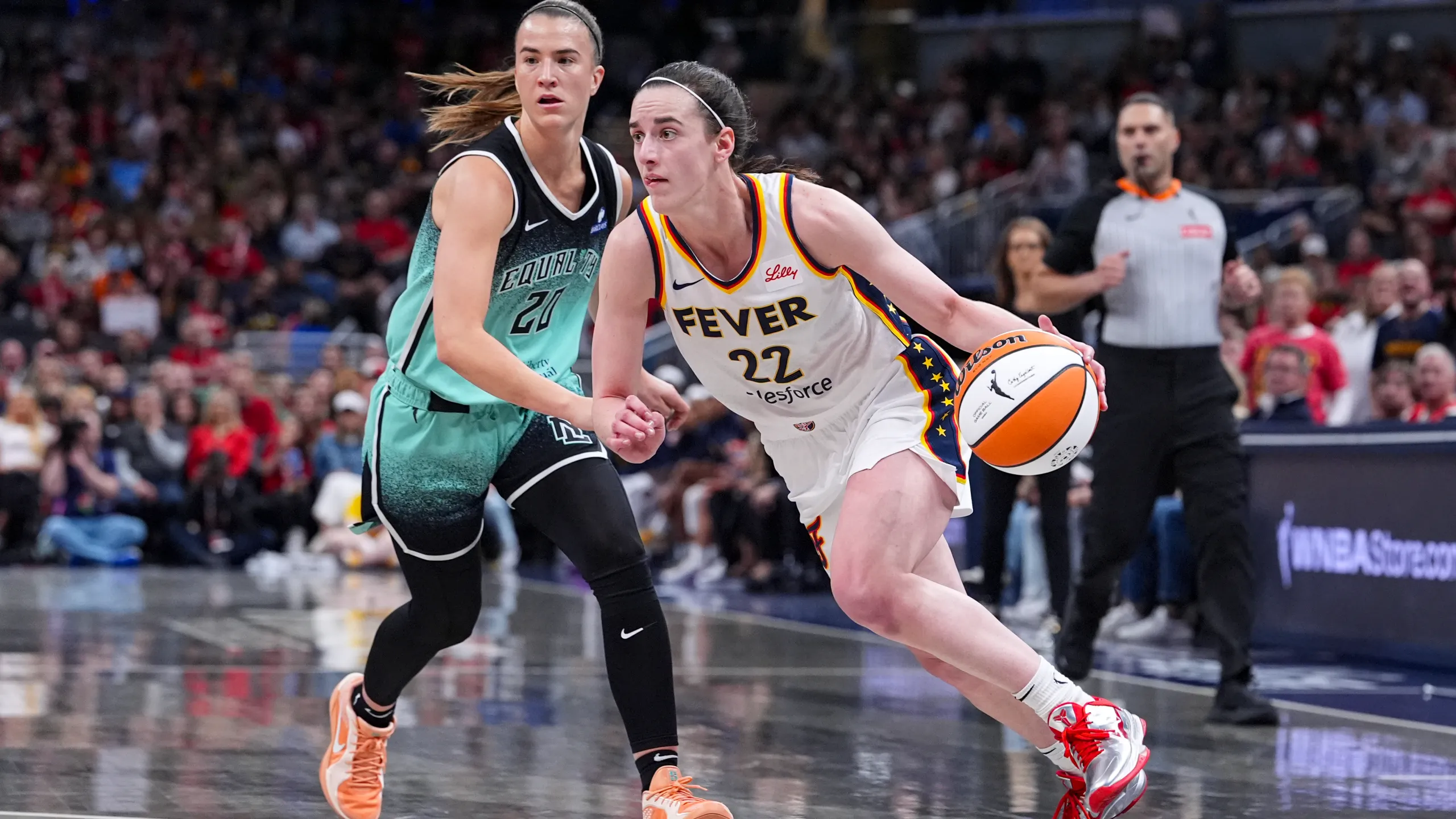
INDIANA FEVER (+850)
Strengths: No playoff team possesses more pure offensive firepower. Kelsey Mitchell is averaging nearly 25 points, Caitlin Clark combines elite range with league-leading-caliber distribution, and Aliyah Boston provides efficient interior scoring. Indiana has already produced a WNBA-record 16 games with at least 100 points, demonstrating a ceiling few opponents can match.
Weaknesses: Indiana’s pace can work against it when turnovers lead to easy points in the opposite direction. The Fever must prove they can consistently defend, rebound and execute in slower, more physical postseason games. Their offensive stars also will see increasingly aggressive traps designed to force secondary players to make decisions.
NEW YORK LIBERTY (+1400)
Strengths: New York remains far more dangerous than its current position suggests. Breanna Stewart, Jonquel Jones and Sabrina Ionescu form a championship-caliber foundation, while Leonie Fiebich’s return improves the Liberty’s size, defense and lineup flexibility. New York has enough experience, shooting and star power to make an eighth seed uncomfortable for any opponent.
Weaknesses: Health and offensive inconsistency have defined the season. Ionescu has endured a prolonged shooting slump, including an 8-for-50 stretch from 3-point range across seven games, while Satou Sabally has been sidelined by lingering concussion symptoms. New York recently shot only 30.2% in a 79-60 loss to Golden State, illustrating how stagnant the offense can become when perimeter shots disappear.
WASHINGTON MYSTICS (+7000)
Strengths: Washington’s young core has matured ahead of schedule. Shakira Austin provides interior scoring and rim protection, Sonia Citron offers two-way versatility, and Kiki Iriafen gives the Mystics another powerful rebounder and scorer. Their size and energy can punish smaller teams, while the absence of championship expectations allows Washington to play freely.
Weaknesses: The Mystics are the youngest team in the league and lack the postseason experience of the other contenders. Close games will test their ball security, shot selection and late-game execution. Opponents may also crowd the paint and challenge Washington’s perimeter players to win an entire series from outside.
DALLAS WINGS (+7500)
Strengths: Paige Bueckers gives Dallas a poised, efficient lead guard capable of controlling games as both a scorer and facilitator. Jessica Shepard provides consistent rebounding and interior production, while Arike Ogunbowale remains capable of explosive scoring stretches. Dallas has several creators who can punish defensive switches and turn a close game quickly.
Weaknesses: The season-ending knee injury to Azzi Fudd removed a 13-point scorer and one of the Wings’ best floor-spacers. Dallas can also become overly dependent upon Bueckers and Ogunbowale creating difficult shots. Defensive consistency and postseason inexperience are significant concerns against the league’s disciplined top seeds.
Minnesota and Golden State have separated themselves at the top, while only three games divide Las Vegas in third place from New York in eighth. That congestion makes the battle for first-round home-court advantage nearly as compelling as the playoff race itself. The postseason field includes Minnesota, Golden State, Las Vegas, Atlanta, Indiana, Washington, Dallas and New York.
Nevertheless, as the teams prepare for the World Cup break, here is a breakdown of the eight-team field, with a look at their strengths and weaknesses (odds courtesy of DraftKings):
MINNESOTA LYNX (-110)
Strengths: Minnesota owns the league’s best record because it can beat opponents in multiple ways. Rookie point guard Olivia Miles has supplied elite scoring and playmaking, Kayla McBride remains one of the WNBA’s most dangerous perimeter shooters, and Napheesa Collier gives the Lynx an established two-way superstar. Their balance, defensive discipline and ability to execute late make them the most complete team in the field.
Weaknesses: Collier’s health and conditioning following offseason ankle surgeries remain important. Minnesota will also be asking Miles to control playoff games as a rookie, where opponents will aggressively test her decision-making and physicality.
GOLDEN STATE VALKYRIES (+650)
Strengths: Golden State’s identity will travel. The Valkyries allow the fewest points per game and possess the depth, length and versatility to change coverages throughout a series. Gabby Williams impacts both ends, Veronica Burton organizes the offense, and Sixth Player of the Year candidate Janelle Salaün gives them legitimate scoring off the bench. Golden State recently held New York to a season-low 60 points.
Weaknesses: The Valkyries lack the proven, high-volume superstar most championship teams rely upon when half-court possessions become difficult. If their defense does not create transition opportunities, generating dependable late-clock offense could become a problem.
LAS VEGAS ACES (+650)
Strengths: Las Vegas has the postseason’s greatest individual advantage in A’ja Wilson, who is averaging approximately 26 points, 10 rebounds and two blocks. Jackie Young and Chelsea Gray give the defending champions two additional creators, while Jewell Loyd provides scoring potential off the bench. Championship experience, composure and Wilson’s ability to rescue broken possessions make the Aces exceptionally dangerous.
Weaknesses: NaLyssa Smith’s season-ending injury removes an efficient interior scorer and Wilson’s primary frontcourt partner. Smith was averaging 11.7 points and 6.4 rebounds while leading the league at 63.8% shooting. Las Vegas must now replace her size, rebounding and finishing with a thinner rotation.
ATLANTA DREAM (+850)
Strengths: Atlanta possesses perhaps the league’s most imposing collection of athletic talent. Allisha Gray and Rhyne Howard supply perimeter scoring, Angel Reese controls the glass, and Jordin Canada creates opportunities for everyone. The Dream own one of the WNBA’s highest-scoring offenses and have added DeWanna Bonner, whose size, versatility and extensive playoff experience strengthen an already deep rotation.
Weaknesses: The Dream’s aggressive style can become inefficient when shots stop falling or the game slows down. Atlanta must avoid turnovers, rushed perimeter attempts and stretches in which its half-court offense becomes too dependent upon individual shot-making. Integrating Bonner into established rotations also must occur quickly.
INDIANA FEVER (+850)
Strengths: No playoff team possesses more pure offensive firepower. Kelsey Mitchell is averaging nearly 25 points, Caitlin Clark combines elite range with league-leading-caliber distribution, and Aliyah Boston provides efficient interior scoring. Indiana has already produced a WNBA-record 16 games with at least 100 points, demonstrating a ceiling few opponents can match.
Weaknesses: Indiana’s pace can work against it when turnovers lead to easy points in the opposite direction. The Fever must prove they can consistently defend, rebound and execute in slower, more physical postseason games. Their offensive stars also will see increasingly aggressive traps designed to force secondary players to make decisions.
NEW YORK LIBERTY (+1400)
Strengths: New York remains far more dangerous than its current position suggests. Breanna Stewart, Jonquel Jones and Sabrina Ionescu form a championship-caliber foundation, while Leonie Fiebich’s return improves the Liberty’s size, defense and lineup flexibility. New York has enough experience, shooting and star power to make an eighth seed uncomfortable for any opponent.
Weaknesses: Health and offensive inconsistency have defined the season. Ionescu has endured a prolonged shooting slump, including an 8-for-50 stretch from 3-point range across seven games, while Satou Sabally has been sidelined by lingering concussion symptoms. New York recently shot only 30.2% in a 79-60 loss to Golden State, illustrating how stagnant the offense can become when perimeter shots disappear.
WASHINGTON MYSTICS (+7000)
Strengths: Washington’s young core has matured ahead of schedule. Shakira Austin provides interior scoring and rim protection, Sonia Citron offers two-way versatility, and Kiki Iriafen gives the Mystics another powerful rebounder and scorer. Their size and energy can punish smaller teams, while the absence of championship expectations allows Washington to play freely.
Weaknesses: The Mystics are the youngest team in the league and lack the postseason experience of the other contenders. Close games will test their ball security, shot selection and late-game execution. Opponents may also crowd the paint and challenge Washington’s perimeter players to win an entire series from outside.
DALLAS WINGS (+7500)
Strengths: Paige Bueckers gives Dallas a poised, efficient lead guard capable of controlling games as both a scorer and facilitator. Jessica Shepard provides consistent rebounding and interior production, while Arike Ogunbowale remains capable of explosive scoring stretches. Dallas has several creators who can punish defensive switches and turn a close game quickly.
Weaknesses: The season-ending knee injury to Azzi Fudd removed a 13-point scorer and one of the Wings’ best floor-spacers. Dallas can also become overly dependent upon Bueckers and Ogunbowale creating difficult shots. Defensive consistency and postseason inexperience are significant concerns against the league’s disciplined top seeds.
